
CINTAGAS
Events

"Thank You, My Chinese Doctors!" Mongolian Patient Travels Far for Jiangsu Treatment
Recently, the team led by Professor Xu Zekuan from the Gastric Cancer Center of Jiangsu Provincial People’s Hospital (The First Affiliated Hospital of Nanjing Medical University & Jiangsu Maternity and Child Health Care Hospital) successfully performed a laparoscopic total gastrectomy on an advanced gastric cancer patient from Mongolia. Currently, the patient is recovering well and was discharged on June 20.
Mongolian Patient Seeks Cross-Border Treatment, Jiangsu Doctors Offer "Chinese Approach"
It is understood that the 56-year-old Mongolian patient, Mr. Gankhuyag, sought medical advice at a local hospital approximately two months ago due to stomach discomfort. He was diagnosed with gastric cancer after a gastroscopy, a news that left him overwhelmed. Determined to find better treatment options, Mr. Gankhuyag embarked on a journey to seek medical help and researched advanced foreign treatment technologies online. During this process, he remembered that his friend, Dr. Bayarsaikhan, was studying in China and urgently contacted him for assistance. Upon receiving the call for help, Dr. Bayarsaikhan suggested his friend come to China for treatment.
Dr. Bayarsaikhan, a general surgeon from Mongolia, recently participated in the 2nd training course of the China International Training Academy of Gastric Surgery (CINTAGAS) hosted by Jiangsu Provincial People’s Hospital and is currently undertaking advanced studies at the Gastric Cancer Center. During his studies, he gained an in-depth understanding of the center’s leading technologies and rich experience in gastric cancer treatment, prompting him to recommend his friend to seek treatment in China.
After careful consideration, Mr. Gankhuyag accepted his doctor friend’s suggestion and traveled thousands of miles to China for medical care. In accordance with the agreement between the governments of China and Mongolia on mutual travel of their citizens, Mongolian citizens holding valid passports can enter China visa-free for a stay of 30 days, which greatly facilitates personnel exchanges between the two countries. In addition to his trust in Chinese medical technology, this policy was also an important reason for Mr. Gankhuyag’s decision to seek treatment in China.
However, for Mr. Gankhuyag, this cross-border trip was filled with uncertainty and anxiety; for Professor Xu Zekuan’s team at the Gastric Cancer Center, the patient’s treatment also posed significant challenges. Preliminary examinations revealed that the patient weighed 130 kg and stood nearly 1.9 meters tall, with a confirmed diagnosis of gastric cancer. The tumor was located on the greater curvature and fundus of the stomach, at a relatively advanced stage. Additionally, he had complex underlying diseases including diabetes and coronary heart disease, with a history of 6 cardiac stent implantations, making the surgery quite challenging.
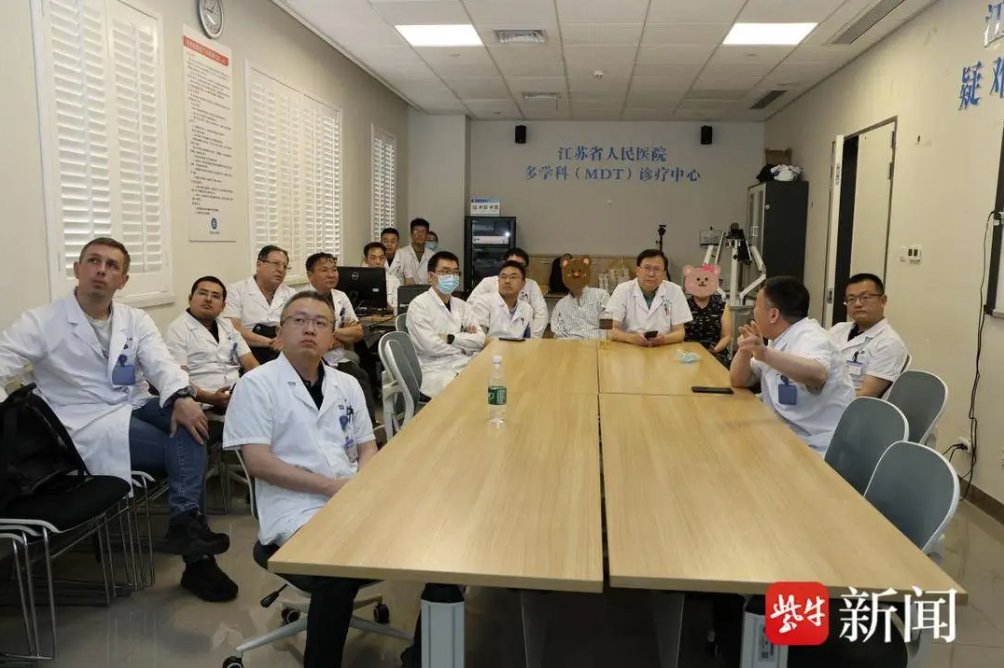
After a comprehensive assessment of the patient’s condition through MDT (Multidisciplinary Team) discussions, the center’s multidisciplinary team determined that despite the complex condition, the patient was still eligible for surgery. As expected, Mr. Gankhuyag received the good news.
Multidisciplinary Integration + Minimally Invasive Technology, Laparoscopic Surgery Aids Gastric Cancer Treatment
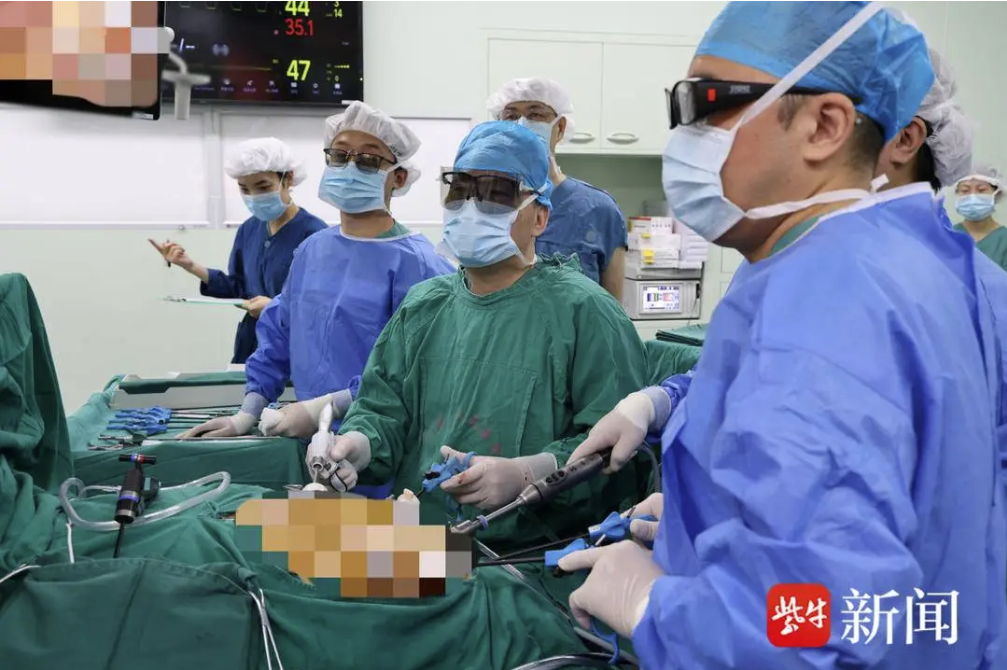
On June 11, Director Xu Zekuan led his team, including Chief Physician Wang Linjun and Attending Physician Wang Sen, to perform a laparoscopic total gastrectomy on the patient. Due to the patient’s fragile tissues that were prone to bleeding, the lymph node dissection process was conducted with extreme caution and precision. Moreover, the lesion was located on the greater curvature with numerous suspicious positive lymph nodes, requiring splenic hilar lymph node dissection.
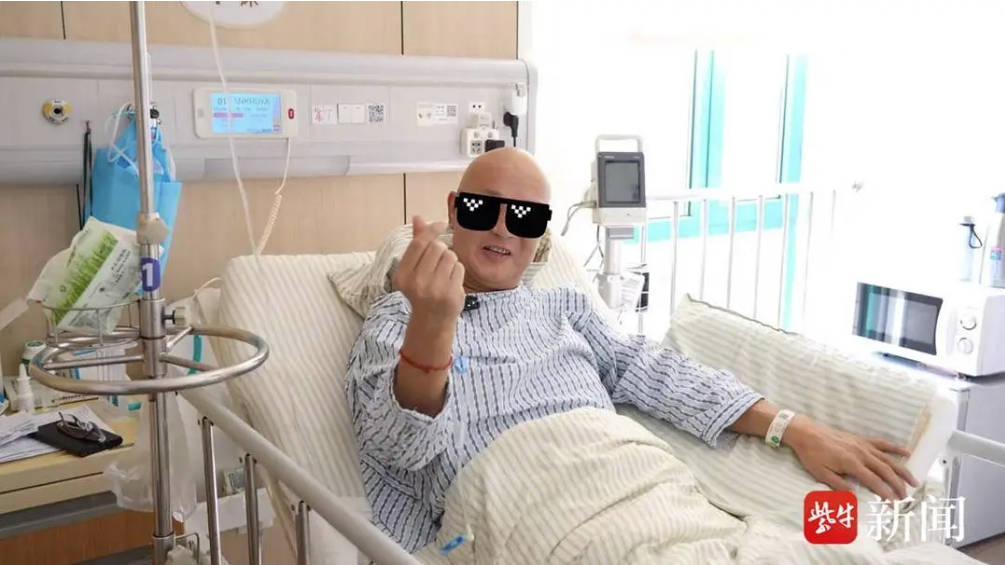
With superb minimally invasive technology, the surgery was successfully completed. Postoperatively, in conjunction with the suggestions of Chief Physician Wang Jian from the Department of Oncology, the treatment team formulated a precise chemotherapy and immunotherapy plan for the patient. Currently, Mr. Gankhuyag is recovering well and has been discharged and returned to Mongolia on June 20. Before his departure, he sincerely expressed his gratitude to the medical team, saying, "Thank you, I love you all." It is reported that after completing 3 cycles of medication treatment in Mongolia, he will return to Nanjing for re-evaluation, and the team will determine the subsequent treatment plan based on his condition.
Notably, this is not an isolated case. Recently, the center also performed Endoscopic Submucosal Dissection (ESD) for another Mongolian patient with colonic polyps, who also traveled thousands of miles specifically for endoscopic treatment and has since recovered and returned to Mongolia.
The arrival of multiple foreign patients seeking treatment in Jiangsu is closely related to Jiangsu Provincial People’s Hospital’s active practice in international medical cooperation in recent years. There are many foreign doctors like Dr. Bayarsaikhan studying in China. As early as October 2024, Jiangsu Provincial People’s Hospital hosted the first training course of the China International Training Academy of Gastric Surgery (CINTAGAS), gathering outstanding surgeons from Sudan, Spain, Chile and other countries to exchange ideas, conduct training, and promote the latest progress and treatment technologies in the field of gastric surgery.
In May this year, the 2nd CINTAGAS training course was launched as scheduled, bringing together five doctors from Belarus, Peru, and Mongolia, which is still ongoing. During the three-month study period, they continuously engaged in clinical practice and conducted extensive and in-depth exchanges on gastric cancer diagnosis and treatment concepts and technologies. Such international medical exchanges and cooperation not only promote the integration and sharing of advanced medical technologies at home and abroad but also the "China Solutions" they bring back will provide more options and opportunities for patients worldwide.
Internal-External Collaboration "Disease-Specific Center" Model, Building a Full-Cycle Management System for Gastric Cancer
Reporters learned that the hospital’s Gastric Cancer Center was established in 2024. Although the center is relatively new, the hospital’s gastric cancer specialist construction can be traced back to the Department of General Surgery (Gastric Surgery) established in 2014. After ten years of development, the center performed 2,000 gastric cancer surgeries in 2024, with minimally invasive laparoscopic surgery accounting for 90%, and robotic surgery also being carried out simultaneously, placing its diagnosis and treatment scale among the world’s leading ranks. The core advantage of the center lies in the "Multidisciplinary Collaboration (MDT) + Full-Cycle Management" model, namely precise triage and personalized treatment: through MDT discussions, the optimal plan is formulated for patients. Early-stage patients can be referred to the Department of Gastroenterology for ESD minimally invasive treatment; those suitable for surgery can choose laparoscopic or robotic surgery based on their condition; advanced-stage patients first receive conversion therapy such as immunotherapy, chemotherapy, or radiotherapy from the Department of Oncology before undergoing elective surgery. Many advanced cases have regained surgical opportunities through this model. This internal-external linkage model, featuring in-depth integration of internal and surgical departments and breaking disciplinary barriers, forms a closed loop from preoperative diagnosis to postoperative rehabilitation, ensuring that patients at all stages receive standardized and personalized treatment.
Talking about future plans, Professor Xu Zekuan stated that the Gastric Cancer Center will continue to take "patient-centered care" as its core and clarify three major development directions: first, deepen the full-cycle management system, focusing on improving postoperative rehabilitation plans such as nutritional support in addition to surgical treatment, and building a comprehensive care system from diagnosis and treatment to rehabilitation. Second, expand international academic influence. The center has already made its mark on the international stage; in May this year, the team was invited to participate in the 16th International Gastric Cancer Congress (IGCC) and delivered a speech at the main venue, representing China in sharing clinical research achievements. In the future, through continuous improvement of diagnosis and treatment technologies, it will attract more international patients and promote international cooperation in gastric cancer diagnosis and treatment. Third, consolidate the foundation of discipline construction. Under the leadership of Professor Xu Hao, Director of the Department of Gastric Surgery, further increase the proportion of robotic surgeries, strengthen the standardized operation of the MDT model, and strive to become a benchmark center in the global field of gastric cancer diagnosis and treatment with the purpose of "providing the best services for patients."
Mongolian Patient Seeks Cross-Border Treatment, Jiangsu Doctors Offer "Chinese Approach"
It is understood that the 56-year-old Mongolian patient, Mr. Gankhuyag, sought medical advice at a local hospital approximately two months ago due to stomach discomfort. He was diagnosed with gastric cancer after a gastroscopy, a news that left him overwhelmed. Determined to find better treatment options, Mr. Gankhuyag embarked on a journey to seek medical help and researched advanced foreign treatment technologies online. During this process, he remembered that his friend, Dr. Bayarsaikhan, was studying in China and urgently contacted him for assistance. Upon receiving the call for help, Dr. Bayarsaikhan suggested his friend come to China for treatment.
Dr. Bayarsaikhan, a general surgeon from Mongolia, recently participated in the 2nd training course of the China International Training Academy of Gastric Surgery (CINTAGAS) hosted by Jiangsu Provincial People’s Hospital and is currently undertaking advanced studies at the Gastric Cancer Center. During his studies, he gained an in-depth understanding of the center’s leading technologies and rich experience in gastric cancer treatment, prompting him to recommend his friend to seek treatment in China.
After careful consideration, Mr. Gankhuyag accepted his doctor friend’s suggestion and traveled thousands of miles to China for medical care. In accordance with the agreement between the governments of China and Mongolia on mutual travel of their citizens, Mongolian citizens holding valid passports can enter China visa-free for a stay of 30 days, which greatly facilitates personnel exchanges between the two countries. In addition to his trust in Chinese medical technology, this policy was also an important reason for Mr. Gankhuyag’s decision to seek treatment in China.
However, for Mr. Gankhuyag, this cross-border trip was filled with uncertainty and anxiety; for Professor Xu Zekuan’s team at the Gastric Cancer Center, the patient’s treatment also posed significant challenges. Preliminary examinations revealed that the patient weighed 130 kg and stood nearly 1.9 meters tall, with a confirmed diagnosis of gastric cancer. The tumor was located on the greater curvature and fundus of the stomach, at a relatively advanced stage. Additionally, he had complex underlying diseases including diabetes and coronary heart disease, with a history of 6 cardiac stent implantations, making the surgery quite challenging.
After a comprehensive assessment of the patient’s condition through MDT (Multidisciplinary Team) discussions, the center’s multidisciplinary team determined that despite the complex condition, the patient was still eligible for surgery. As expected, Mr. Gankhuyag received the good news.
Multidisciplinary Integration + Minimally Invasive Technology, Laparoscopic Surgery Aids Gastric Cancer Treatment
On June 11, Director Xu Zekuan led his team, including Chief Physician Wang Linjun and Attending Physician Wang Sen, to perform a laparoscopic total gastrectomy on the patient. Due to the patient’s fragile tissues that were prone to bleeding, the lymph node dissection process was conducted with extreme caution and precision. Moreover, the lesion was located on the greater curvature with numerous suspicious positive lymph nodes, requiring splenic hilar lymph node dissection.
With superb minimally invasive technology, the surgery was successfully completed. Postoperatively, in conjunction with the suggestions of Chief Physician Wang Jian from the Department of Oncology, the treatment team formulated a precise chemotherapy and immunotherapy plan for the patient. Currently, Mr. Gankhuyag is recovering well and has been discharged and returned to Mongolia on June 20. Before his departure, he sincerely expressed his gratitude to the medical team, saying, "Thank you, I love you all." It is reported that after completing 3 cycles of medication treatment in Mongolia, he will return to Nanjing for re-evaluation, and the team will determine the subsequent treatment plan based on his condition.
Notably, this is not an isolated case. Recently, the center also performed Endoscopic Submucosal Dissection (ESD) for another Mongolian patient with colonic polyps, who also traveled thousands of miles specifically for endoscopic treatment and has since recovered and returned to Mongolia.
The arrival of multiple foreign patients seeking treatment in Jiangsu is closely related to Jiangsu Provincial People’s Hospital’s active practice in international medical cooperation in recent years. There are many foreign doctors like Dr. Bayarsaikhan studying in China. As early as October 2024, Jiangsu Provincial People’s Hospital hosted the first training course of the China International Training Academy of Gastric Surgery (CINTAGAS), gathering outstanding surgeons from Sudan, Spain, Chile and other countries to exchange ideas, conduct training, and promote the latest progress and treatment technologies in the field of gastric surgery.
In May this year, the 2nd CINTAGAS training course was launched as scheduled, bringing together five doctors from Belarus, Peru, and Mongolia, which is still ongoing. During the three-month study period, they continuously engaged in clinical practice and conducted extensive and in-depth exchanges on gastric cancer diagnosis and treatment concepts and technologies. Such international medical exchanges and cooperation not only promote the integration and sharing of advanced medical technologies at home and abroad but also the "China Solutions" they bring back will provide more options and opportunities for patients worldwide.
Internal-External Collaboration "Disease-Specific Center" Model, Building a Full-Cycle Management System for Gastric Cancer
Reporters learned that the hospital’s Gastric Cancer Center was established in 2024. Although the center is relatively new, the hospital’s gastric cancer specialist construction can be traced back to the Department of General Surgery (Gastric Surgery) established in 2014. After ten years of development, the center performed 2,000 gastric cancer surgeries in 2024, with minimally invasive laparoscopic surgery accounting for 90%, and robotic surgery also being carried out simultaneously, placing its diagnosis and treatment scale among the world’s leading ranks. The core advantage of the center lies in the "Multidisciplinary Collaboration (MDT) + Full-Cycle Management" model, namely precise triage and personalized treatment: through MDT discussions, the optimal plan is formulated for patients. Early-stage patients can be referred to the Department of Gastroenterology for ESD minimally invasive treatment; those suitable for surgery can choose laparoscopic or robotic surgery based on their condition; advanced-stage patients first receive conversion therapy such as immunotherapy, chemotherapy, or radiotherapy from the Department of Oncology before undergoing elective surgery. Many advanced cases have regained surgical opportunities through this model. This internal-external linkage model, featuring in-depth integration of internal and surgical departments and breaking disciplinary barriers, forms a closed loop from preoperative diagnosis to postoperative rehabilitation, ensuring that patients at all stages receive standardized and personalized treatment.
Talking about future plans, Professor Xu Zekuan stated that the Gastric Cancer Center will continue to take "patient-centered care" as its core and clarify three major development directions: first, deepen the full-cycle management system, focusing on improving postoperative rehabilitation plans such as nutritional support in addition to surgical treatment, and building a comprehensive care system from diagnosis and treatment to rehabilitation. Second, expand international academic influence. The center has already made its mark on the international stage; in May this year, the team was invited to participate in the 16th International Gastric Cancer Congress (IGCC) and delivered a speech at the main venue, representing China in sharing clinical research achievements. In the future, through continuous improvement of diagnosis and treatment technologies, it will attract more international patients and promote international cooperation in gastric cancer diagnosis and treatment. Third, consolidate the foundation of discipline construction. Under the leadership of Professor Xu Hao, Director of the Department of Gastric Surgery, further increase the proportion of robotic surgeries, strengthen the standardized operation of the MDT model, and strive to become a benchmark center in the global field of gastric cancer diagnosis and treatment with the purpose of "providing the best services for patients."
